Desnaring an elephant
We recently travelled to Vwaza Marsh Wildlife Reserve to assist the Nyika Vwaza Co-Management Trust with removing a tracking collar from an elephant which had become loose.
But as we flew over the park to locate the animal, we noticed another elephant which looked significantly underweight and appeared to have injuries — we had to intervene.
The bush was too dense to dart the animal from the air, so we landed and tracked the elephant on foot, with the help of a drone (the footage in the video).
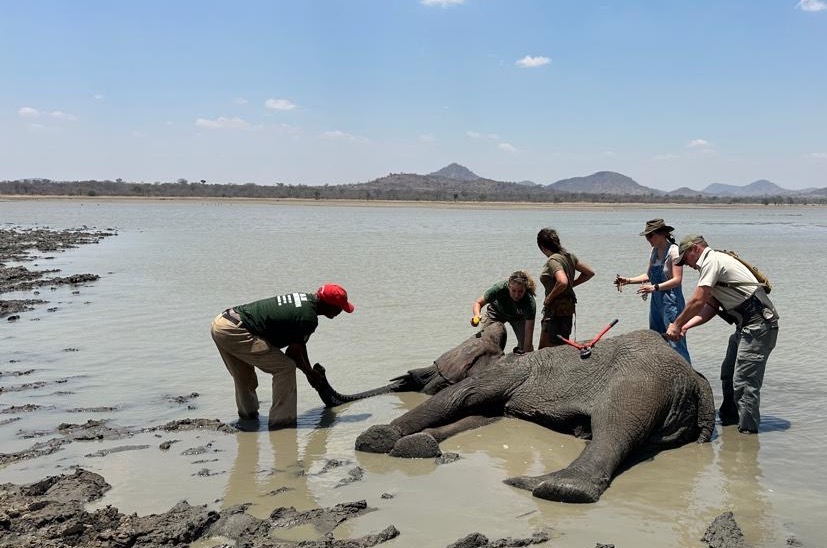
It took a while to get into the right position, but we finally managed to dart the elephant successfully near the edge of a lake, which helped to keep her cool. While holding its trunk out of the water, we managed to remove a snare caught around its neck and ears, likely affecting its ability to eat.
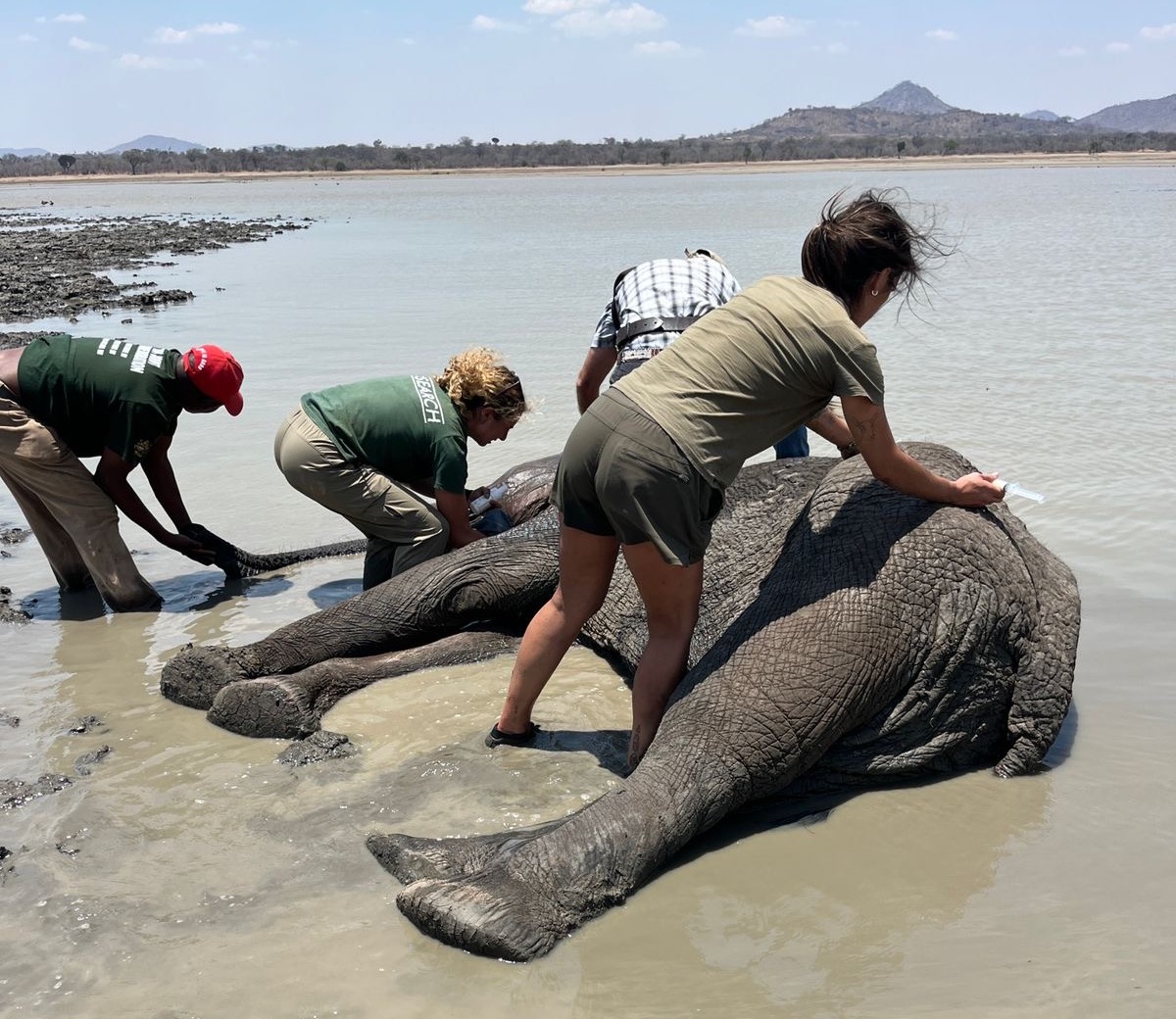
After treating the wound and reversing the anaesthetic, we made sure the elephant woke up safely and walked away. The next day we spotted her in the woodland, looking well.
We also managed to locate the collared elephant and successfully remove its collar. Now there are a couple of much happier elephants out there!
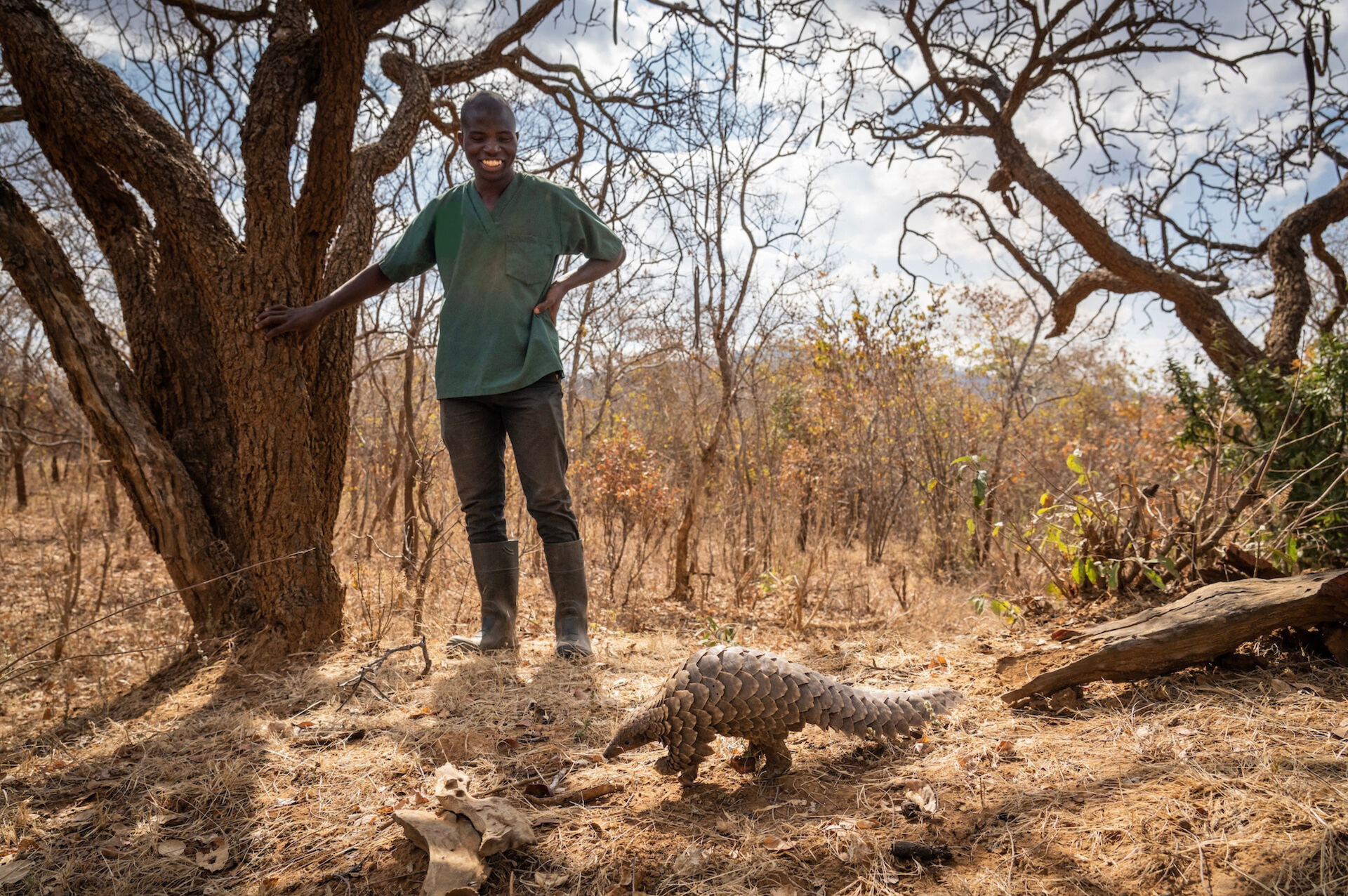
Sadly, this is not an isolated case. In the past few months we’ve responded to snare incidents involving lions, antelopes, zebras, pangolins, and many more. Snares can cause intense and prolonged suffering. With your help, we can secure the resources to respond as quickly as possible, saving wild animals from pain and death before it’s too late.